CIMA: the Inter-African Conference on Insurance Markets
What is CIMA, the regulator of insurance markets
CIMA (Inter-African Conference on Insurance Markets) is a regional organisation created by the treaty signed in Yaoundé on 10 July 1992. It brings together 14 French-, Spanish- and Portuguese-speaking African states around a single insurance code and joint supervision of insurance and reinsurance companies. Its headquarters is in Libreville, Gabon.
Treaty, history and member states of CIMA
The Yaoundé treaty established an integrated organisation of the insurance industry in African states. It replaced the International Conference on Insurance Supervision in the African States (CICA), whose headquarters had been moved to Libreville in 1976. Guinea-Bissau acceded to the treaty in April 2002.
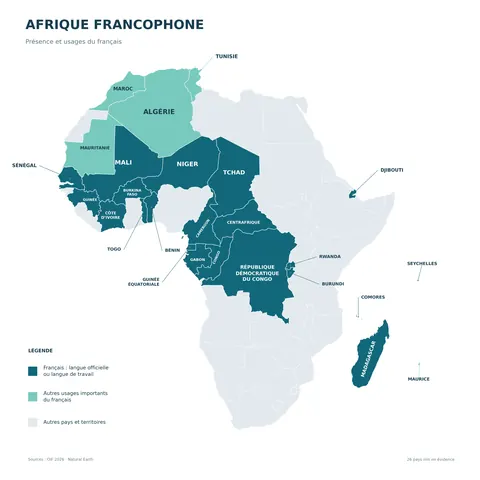
CIMA now has 14 member states: Benin, Burkina Faso, Cameroon, the Central African Republic, the Republic of the Congo, Ivory Coast (Côte d'Ivoire), Gabon, Guinea-Bissau, Equatorial Guinea, Mali, Niger, Senegal, Chad and Togo. These countries belong to the CFA franc zones, but CIMA rests on its own treaty, separate from the monetary treaties.
Insurance code and common regulation
The CIMA insurance code has applied in all member states since 15 February 1995. It replaced scattered national legislation, largely inherited from French laws predating 1960. It governs in particular the insurance contract, the operations of companies, the obligations of general agents and brokers, and the scale of compensation for road accident victims.
This regulation forms a uniform body of law: a policyholder in Senegal and one in Cameroon are subject to the same rules on the formation, performance and termination of the contract. States nevertheless retain competence over insurance intermediaries and technical experts, which CIMA does not supervise directly.
CIMA bodies and insurance supervision
The Council of Insurance Ministers (CMA) is the governing body: it adopts and amends the code and sets the organisation's direction. The Regional Insurance Control Commission (CRCA) supervises insurance and reinsurance companies, monitors national markets and has sanctioning power. National insurance directorates relay its action in each country.
The General Secretariat prepares the work of the Council and the Commission and liaises with the autonomous institutions. An expert committee issues advisory opinions. Affiliated institutions include the International Insurance Institute (IIA), which awards training diplomas, and the joint reinsurance company CICA-RE.
Missions: consistency, solvency and savings
The missions of CIMA cover cooperation between markets, the development of companies able to cover major risks, supervision of companies with sanctioning power, staff training and support for regional investment. It also promotes life insurance as a way of mobilising savings.
The solvency of insurers and the protection of policyholders guide regulation: prudential rules, technical provisions and companies' investments are governed in the same way from one country to another.