Population of Congo-Brazzaville: inhabitants, cities and languages
Population of Congo-Brazzaville: the essentials from the latest census
The population of Congo-Brazzaville stands at 6,142,180 inhabitants at the census of 17 May 2023, spread over a territory of 342,000 km² between the Congo River, the equatorial forest and the Atlantic coast. It is concentrated in two large cities in the south, Brazzaville and Pointe-Noire.
This figure comes from the fifth general census of population and housing. The average density remains low, at around 18 inhabitants per km², but it hides sharp contrasts: most inhabitants live in the south, while the forested north, around the Sangha and the Likouala, remains sparsely populated. The population continues to grow since this census.
Rapid growth and a very young population
According to the 2023 census, the population has grown by 3.2% a year since the 2007 census. At this rate, it would double in twenty-two years. The average age is 23: around 51% of inhabitants are under 20, around 44% are aged 20 to 59 and only 4.6% are aged 60 or over.
The World Bank notes that nearly half of the population is under 18. This youthfulness weighs on schools, health and jobs: youth unemployment is close to 42%, and access to electricity reaches 67% in urban areas against 12.4% in rural areas.
Brazzaville, Pointe-Noire and urbanisation
Brazzaville, the capital, has 2,145,783 inhabitants, or 34.9% of the national population. Pointe-Noire, a major Atlantic port and oil centre, has 1,420,612, or 23.1% (2023 census). Together, the two cities hold 58.1% of Congolese people.
Brazzaville faces Kinshasa, capital of the Democratic Republic of the Congo, on the other side of the river: they are two of the closest capitals in the world. Population growth has mainly benefited urban centres. Secondary towns such as Dolisie, Nkayi and Ouesso structure the interior of the country, but remain much smaller than the two southern hubs.
Languages spoken in Congo-Brazzaville
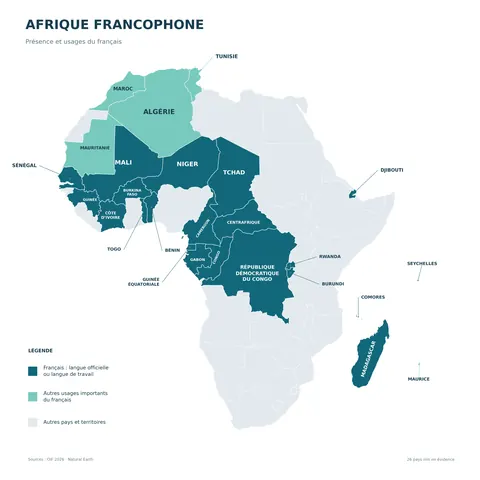
French is the official language, used in administration, schools and the media. Lingala and Kituba, also called Monokutuba, have the status of national languages. Lingala is widespread in the north and in Brazzaville, while Kituba serves as a lingua franca in the south, notably around Pointe-Noire and Dolisie.
These two languages coexist with many local languages, linked to the main population groups: the Kongo in the south, the Teke on the central plateaux and the Mbochi in the north.
Migration: the population of Congo-Brazzaville on the move
The country is above all a land of refuge in the sub-region. According to the Congolese authorities speaking to UNHCR, it hosted more than 78,000 refugees and asylum seekers in 2025, a steadily rising figure, coming mainly from neighbouring countries.
In February 2025, more than 8,000 people fleeing violence in Maï-Ndombé province, in the Democratic Republic of the Congo, crossed the border. Voluntary repatriation convoys to Bangui have also been organised with UNHCR for Central African refugees.