The economy of Equatorial Guinea: oil dependence and diversification
The economy of Equatorial Guinea, built on hydrocarbons
The economy of Equatorial Guinea rests on oil and gas, which accounted for 39% of gross domestic product, 76% of exports and about 86% of government revenue according to the World Bank economic memorandum published in March 2025. The country shares the CFA franc with its Central African neighbours and is going through a downturn linked to the decline in hydrocarbon output.
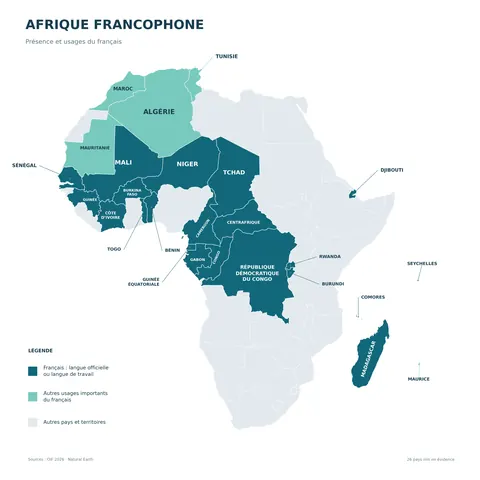
Growth and recent trends
According to the National Institute of Statistics, growth came to 0.9% in 2024, including 1.3% for non-oil activities and 0.4% for the oil sector. The International Monetary Fund estimates that activity contracted by 6.4% in 2025, with hydrocarbon output down 14% over the first three quarters.
The World Bank notes six years of recession since 2015 and a per capita income that has fallen to less than half its 2008 peak. It estimated in 2024 that 57% of inhabitants lived below the poverty line and that unemployment stood at about 14%. Inflation, which rose to 3.5% in March 2023, fell back to 2.6% in October 2025.
Non-oil sectors of activity
In 2024, cocoa production rose by 22% over the 2023-2024 season and electricity output by 3.6%, while roundwood fell by 12.6%. The World Bank notes that manufacturing led the non-hydrocarbon expansion that year and cites ecotourism, agriculture, local wood processing and services among the avenues for diversification.
Foreign trade and the shared currency
Hydrocarbons dominate sales abroad, and exports fell back to 23% of GDP in 2024 according to the World Bank, with a widening current account deficit. Government revenue fell by 15% the same year, mainly because of corporate income tax paid by oil companies.
As a member of the Central African CFA franc zone, the country saw its net foreign assets at the regional central bank fall from 474 to 370 billion CFA francs between December 2024 and August 2025, according to the IMF. Existing customs exemptions have been abolished, except in particular cases, and the ASYCUDA computerised customs system is about 90% deployed at the main entry points of Malabo, Luba and Bata.
Public finances, banks and investment
Public debt rose from 36.4% of GDP in 2024 to about 39.2% at the end of 2025, with an official target of staying below 50%. A programme monitored by the IMF is on its third review. A public procurement law was adopted in November 2025, and the number of government accounts, close to 1,100 in 2022, has fallen below 800 thanks to the single treasury account.
In the banking sector, a plan to clear domestic arrears has been submitted to the Central African Banking Commission for approval, and the authorities are seeking a strategic private partner for the systemic public bank. Publication of a hydrocarbon transparency report is a condition for future IMF financing.