The population of Guinea: demographics, cities, languages and migration
Population of Guinea: definition and census results
The population of Guinea stands at 17,521,167 resident inhabitants, according to the preliminary results of the fourth general population and housing census, carried out in 2025 and published in February 2026 by the National Institute of Statistics. This figure includes foreigners living in the country but not the Guinean diaspora.
It is the first census since 2014, when the country had 10.5 million inhabitants. Over twelve years, the population has therefore grown by about 70%. This rapid growth puts demography at the centre of needs for housing, schools, healthcare and jobs across the country.
A young and mostly rural population
Half of the inhabitants are under 18, and 80% are under 35. This very young age structure makes schooling and entry into the labour market major challenges for the years ahead.
More than 60% of Guineans live in rural areas, while the urban population reaches 6.7 million people, almost double the 2014 figure. Agriculture employs 52% of the workforce, according to the World Bank, which explains the lasting weight of the countryside in the settlement of the territory.
Major cities and regions: Conakry, Kankan, Labé
Conakry, the capital located on the Kaloum peninsula, has 3.4 million inhabitants and is the second most populous region in the country. The Kankan region, in Upper Guinea, comes first with more than 4 million inhabitants, attracted notably by gold mining activity.
The territory is divided into eight administrative regions: Boké, Conakry, Faranah, Kankan, Kindia, Labé, Mamou and Nzérékoré. Each is organised around a main town of the same name, which acts as a market, a road junction and an administrative centre for its hinterland.
Languages and peoples of Guinea
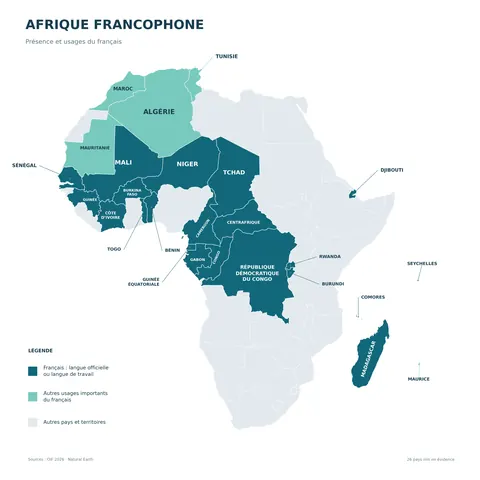
French is the official language of Guinea, used by the administration and in schools. The country also has several widely spoken national languages, including Pular, Malinke and Susu, which serve as everyday languages of communication in daily life and in markets.
These languages correspond to large regional groupings: the Fula dominate Middle Guinea, the Malinke Upper Guinea and the Susu Lower Guinea, including Conakry. Forest Guinea brings together many other peoples, among them the Kpelle and the Toma, with their own languages.
Migration and diaspora of the population of Guinea
Population movements follow the search for work. In the Labé region there are 77 men for every 100 women, owing to male departures linked to the lack of economic opportunities. Conversely, mining areas such as Kankan attract workers from other regions of the country.
The Guinean diaspora, estimated at more than 3 million people, is not included in the census figure. In addition, Guinea is a member of ECOWAS, whose protocols provide for the free movement of persons between member states, which eases work-related travel within the subregion.