Economy of Niger: growth, key sectors, foreign trade and investment
How does the economy of Niger work?
The economy of Niger rests on agriculture, livestock and an extractive sector centred on oil, uranium and gold. According to the International Monetary Fund, real gross domestic product growth is estimated at 6.9% in 2025, supported by these two pillars, agriculture and extraction.
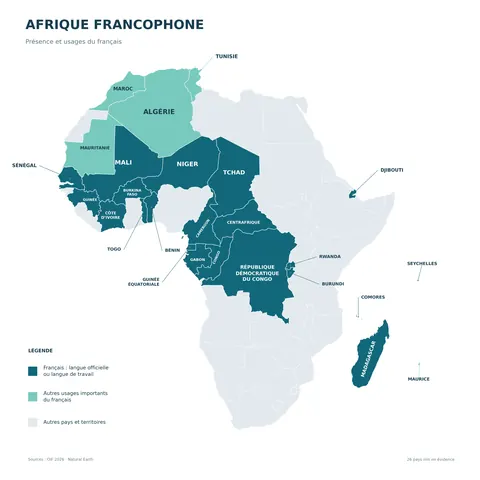
A landlocked Sahelian country, Niger depends on its coastal neighbours to carry its trade. Its performance varies with harvests, commodity prices, security and its regional relations.
Growth and macroeconomic balances
In July 2026 the IMF completed the ninth review of the arrangement concluded with Niger under the Extended Credit Facility, approved on 8 December 2021 and extended until December 2026. It allowed an immediate disbursement of 33 million dollars.
For 2025, the IMF estimates the overall fiscal balance, grants included, at minus 3.3% of gross domestic product, and average annual inflation at minus 4.6%, that is, a fall in prices. The risks identified include worsening security, volatile commodity prices, lower donor financing and the closure of the border with Benin.
Sectors: agriculture, oil, mining
Agriculture, based on rain-fed millet and sorghum crops and on livestock, depends on rainfall, which makes output uneven from one year to the next. The World Bank stresses the role of rains, fertilisers and irrigation in recent agricultural results.
Oil from the Agadem basin, in the east of the country, has changed the structure of exports. Niger's Minister of Foreign Affairs stated in May 2026 that output was about 110,000 barrels per day, after the signing of agreements with Chinese companies to relaunch the Dinga Deep and Abolo-Yogou projects, for an investment of about one billion dollars. Uranium, mined in the Agadez region, and gold complete the exports, according to the World Bank.
Foreign trade, pipeline and investment
Nigerien crude is carried by a pipeline to the Beninese port of Sèmè, operated by the West African Oil Pipeline Company, a subsidiary of the China National Petroleum Corporation. According to the announcements of May 2026, the State of Niger takes 45% of the capital of this company and the transport tariff falls from 27 to 15 dollars per barrel. A diplomatic dispute with Benin has seriously disrupted these exports in recent years.
Chinese companies operate the oil upstream. Trade with neighbours, notably Nigeria, covers livestock, cereals and manufactured goods.
Currency and regional framework
The CFA franc of West Africa, code XOF, issued by the Central Bank of West African States (BCEAO), is the currency in use in Niger. It is pegged to the euro.
Since their exit from the Economic Community of West African States, effective on 29 January 2025, Niger, Mali and Burkina Faso have formed the Confederation of Sahel States. Niger remains a member of the West African Economic and Monetary Union (WAEMU) and continues to use the CFA franc, no exit from the currency having been decided.