Economy of Senegal, between hydrocarbons, debt and investment
Economy of Senegal: growth driven by hydrocarbons
The economy of Senegal rests on services, agriculture, fishing, mining and, since 2024, on oil and gas production. According to the African Development Bank, gross domestic product growth reached 6.9% in 2024, then 8.3% in 2025, while public debt and the budget deficit remain high.
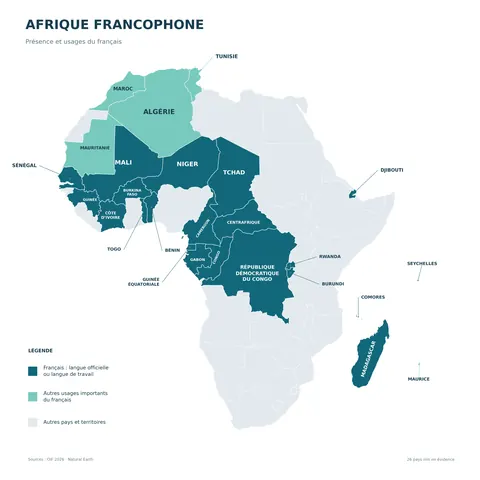
The country belongs to the West African Economic and Monetary Union and shares with the other members the West African CFA franc, issued by the Central Bank of West African States and pegged to the euro.
Growth and sectors of activity
According to the African Development Bank, the secondary sector grew by 21% in 2025 thanks to oil and gas activities, the primary sector by 7.4% and the tertiary sector by 3.3%. Inflation remained low, at 1.4% in 2025 against 0.8% in 2024, supported by energy and food subsidies.
The Sangomar oil field, which came into production in 2024, and the Grand Tortue Ahmeyim gas field, shared with Mauritania, have changed the structure of the economy. Alongside hydrocarbons, groundnuts, millet, rice, horticulture, sea fishing, phosphates, gold and cement provide income and employment. Tourism and the port of Dakar support services. The State has set these priorities within the Senegal 2050 Agenda, a long-term national framework.
Foreign trade and investment
According to the ANSD, exports reached 5,935.2 billion CFA francs in 2025, up 51.8% from the 3,909.1 billion of 2024. For December 2025, the agency's bulletin lists non-monetary gold, crude oil and refined petroleum products at the top. The African Development Bank notes a 22.7% rise in exports in 2025 and a current account deficit reduced from 13.8% of gross domestic product in 2024 to 9.2% in 2025.
Investment is concentrated in energy, infrastructure, mining and agro-industry, with foreign capital and financing from development partners. On the regional debt market, Senegal became in 2025 the second-largest issuer in the Union, with more than 2,224 billion CFA francs raised, according to the same institution.
Public finances, debt and the economy of Senegal facing the IMF
Public debt stood at 132% of gross domestic product at the end of 2024, according to the African Development Bank, and the budget deficit was reduced from 10.9% of gross domestic product in 2024 to 8.4% in 2025. Financing needs for 2026 are estimated at 6,075 billion CFA francs, about three quarters of which go to repaying debt.
In early September 2026, International Monetary Fund staff and the authorities reached a staff-level agreement on a three-year programme of about 2.2 billion dollars, or nearly 1,245 billion CFA francs, following the revelations of discrepancies in debt reporting. The agreement must still be approved by the Fund's Executive Board. The poverty rate is 37.5% and broad unemployment 19.2%, according to the African Development Bank.