The politics of Cameroon: powers, elections and diplomacy
What are the politics of Cameroon?
The politics of Cameroon is organised around a decentralised unitary republic with a strong presidential system, governed by the 1972 Constitution as revised in 1996, in 2008 and in April 2026. The President of the Republic, elected for seven years, heads the executive; Parliament comprises the National Assembly and the Senate, in a multiparty system dominated by the RDPC.
Institutions: executive, Parliament and judiciary
The head of state appoints the Prime Minister, a post held in 2026 by Joseph Dion Ngute, and the members of the government. The National Assembly has 180 deputies elected for five years. The Senate, created in 2013, represents each region with ten senators, of whom seven are indirectly elected and three appointed by the President.
In March 2026, Théodore Datouo was elected President of the National Assembly, and Aboubakary Abdoulaye President of the Senate. The Constitutional Council proclaims the results of national elections, and the Higher Judicial Council oversees the careers of judges. The ten regions are decentralised territorial authorities.
Constitution and the vice-presidency created by the revision
The 1972 text was revised by the law of 18 January 1996, which introduced decentralisation. The 2008 revision removed the limit on presidential terms. On 4 April 2026, Parliament sitting in Congress adopted, by a very large majority, a revision creating the post of Vice-President of the Republic.
Promulgated on 14 April 2026, it provides for a Vice-President appointed and dismissible by the head of state, who would complete the term in the event of a vacancy, in place of the President of the Senate, who until then had acted as interim. At the beginning of November 2026, the post is still unfilled.
Elections: presidential, legislative and municipal
The presidential election was held on 12 October 2025. The Constitutional Council announced on 27 October the victory of Paul Biya, the RDPC candidate, with 53.66% of the vote, for an eighth seven-year term; he was sworn in on 6 November 2025. The candidate Issa Tchiroma Bakary contested this result.
Elected in 2020, the deputies have had their term extended a second time until 20 December 2026, by a law adopted in March 2026. On 9 November 2026, a decree convened the electorate for the legislative and municipal elections, set for 7 February 2027. The term of municipal councillors runs until 28 February 2027.
Diplomacy and regional memberships
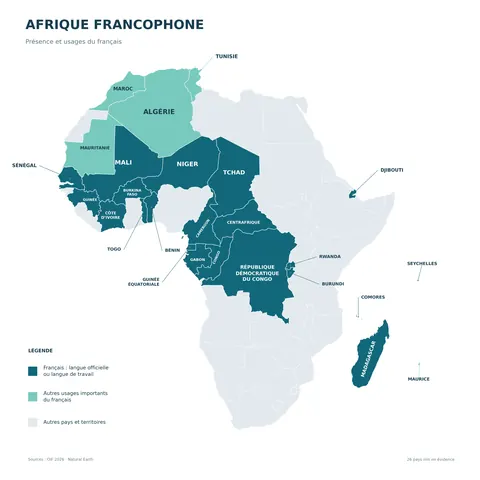
A founding member of the Organisation of African Unity in 1963, which became the African Union, Cameroon also belongs to the Commonwealth and to the International Organisation of La Francophonie, a dual membership linked to its colonial heritage. It sits in CEMAC, of which it is the largest economy.
Its diplomacy was notable in settling the Bakassi dispute: the International Court of Justice awarded the peninsula to Cameroon in October 2002, and Nigeria then handed it back. Since 2015, the country has taken part with Nigeria, Chad and Niger in the Multinational Joint Task Force against Boko Haram, in the Lake Chad basin.