Politics of Senegal, from the Constitution to regional diplomacy
Politics of Senegal: a Constitution, an executive and an Assembly
The politics of Senegal rests on the Constitution of 22 January 2001, which entrusts the executive to the President of the Republic, assisted by a Prime Minister who heads the government, and legislative power to the National Assembly. The country is a secular republic where power has changed hands at the ballot box several times, most recently in 2024.
The President of the Republic, Bassirou Diomaye Faye, elected in March 2024, appoints the Prime Minister and sets the main policy directions. The presidential term lasts five years and is renewable only once. The Constitutional Council, the Supreme Court and the Court of Auditors complete the institutional architecture, alongside a government that meets in the Council of Ministers.
Institutions and parliamentary majority
The National Assembly has 165 members. At the early legislative elections of 17 November 2024, the Pastef party won 130 seats, which gives it a large majority. The Assembly passes legislation, scrutinises the government through questions and the general policy statement, and can hold it to account through a motion of censure.
The Constitutional Council reviews the conformity of laws with the Constitution and can be seized by the government, as shown by its referral in August 2026 on a private member's bill on special funds. Local authorities, municipalities and departments, have elected bodies whose renewal is expected in 2027 at the local elections.
The change of Prime Minister and the new situation in the Assembly
On 22 May 2026, a decree of the President of the Republic ended the duties of Ousmane Sonko, Prime Minister since 2024, and dissolved the government. Ahmadou Al Aminou Mohamed Lo, a former secretary general of the Central Bank of West African States and minister secretary general of the government, was appointed Prime Minister on 25 May by decree 2026-1129. His government was formed on 1 June.
On 26 May 2026, Ousmane Sonko was elected President of the National Assembly with 132 votes out of 133 votes cast, after the resignation of El Hadj Malick Ndiaye. The Prime Minister delivered his general policy statement on 8 September 2026, in an extraordinary session, under article 55 of the Constitution, without a motion of censure being tabled. President Faye launched his own party, Kiiraay-Les patriotes républicains, on 25 July 2026.
Elections and Senegalese diplomacy
The next election is the 2027 local elections, whose date has not yet been set by decree. The presidential election is held every five years, and legislative elections follow the calendar set by the Constitution, unless the Assembly is dissolved.
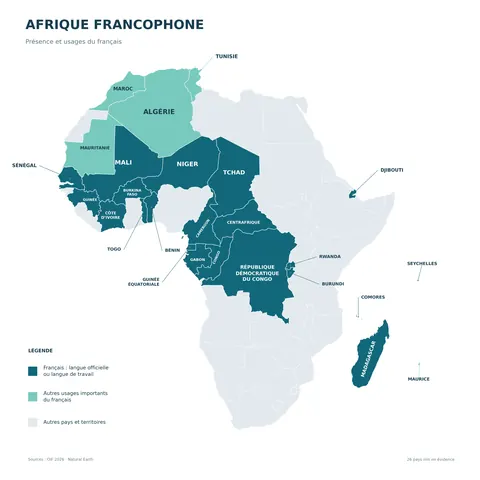
On the diplomatic front, Senegal is a member of the African Union, the Economic Community of West African States, the West African Economic and Monetary Union, the Organisation for the Development of the Senegal River and the International Organisation of La Francophonie. It holds the presidency of the Community's Commission since 2026: General Birame Diop, a former Minister of the Armed Forces, was installed in Abuja on 31 August 2026. The Minister of African Integration and Foreign Affairs, Cheikh Niang, leads this regional and continental diplomacy.