Politics of Burkina Faso: Constitution, transition and diplomacy
How to define the politics of Burkina Faso
The politics of Burkina Faso rests on a transitional regime led by Captain Ibrahim Traoré, President of Faso and head of state. Executive power lies with him and a Prime Minister, head of government, while a Transitional Legislative Assembly exercises legislative power under the revised Constitution and the Transition Charter.
Institutions and the revised Constitution
The constitutional law of 30 December 2023, adopted by the Transitional Legislative Assembly and promulgated by decree on 22 January 2024, amended the Constitution extensively. It creates a National Council of Communities and abolishes the Economic and Social Council, the Mediator of Faso and the High Court of Justice.
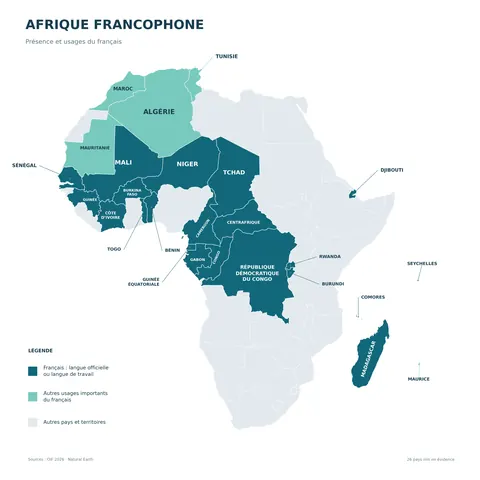
The same revision makes the national languages official languages and ranks French, like English, among the working languages. At the head of the executive, the government is led by Rimtalba Jean Emmanuel Ouédraogo, Prime Minister since December 2024.
Transition, elections and political parties
Meeting in Ouagadougou in May 2024, the national assises adopted a revised charter that sets the length of the transition at 60 months from 2 July 2024. The charter provides for a conclusion through presidential, legislative and municipal elections, and does not bar Captain Traoré from standing. It also abolishes party quotas for seats in the assembly.
The Independent National Electoral Commission was abolished by a law that the assembly passed unanimously on 28 October 2025. The ministry in charge of Territorial Administration now organises elections. At the end of January 2026, the Council of Ministers adopted a decree dissolving all political parties and formations, whose assets pass to the State, together with a bill repealing the texts on their operation, their funding and the status of the opposition, which the assembly passed unanimously on 9 February 2026.
Diplomacy of Burkina Faso: AES, ECOWAS and La Francophonie
Burkina Faso forms, with Mali and Niger, the Confederation of the Alliance of Sahel States, known as the AES. The three states announced in January 2024 their withdrawal from the Economic Community of West African States (ECOWAS), effective on 29 January 2025. Since then, they have been preparing a negotiating framework with that organisation: AES experts met in Ouagadougou on 23 June 2026 to draft its strategic document, after a meeting in May 2026 between the AES foreign ministers and the president of the ECOWAS Commission.
In March 2025, the Burkinabè government also announced its departure from the International Organisation of La Francophonie, alongside Mali and Niger, citing state sovereignty. The country nevertheless remains a member of the West African Economic and Monetary Union and keeps the CFA franc.
Development framework and direction of the State
The government presents the dissolution of the parties as part of the rebuilding of the State. It adopted the RELANCE Plan 2026-2030, whose first pillar concerns security, social cohesion and peace, and the second state reform and governance.